Zero Trust Security Market to Hit USD 145.8 Billion, Growing at 16.3% CAGR by 2035
Zero Trust Security Market is expanding as businesses adopt continuous verification, identity controls &
Press Release Disclaimer: This is a press release distributed through the XPR Media network. It has not been independently verified by our newsroom.

Zero Trust Security Market is expanding as businesses adopt continuous verification, identity controls & least-privilege access to secure digital environments
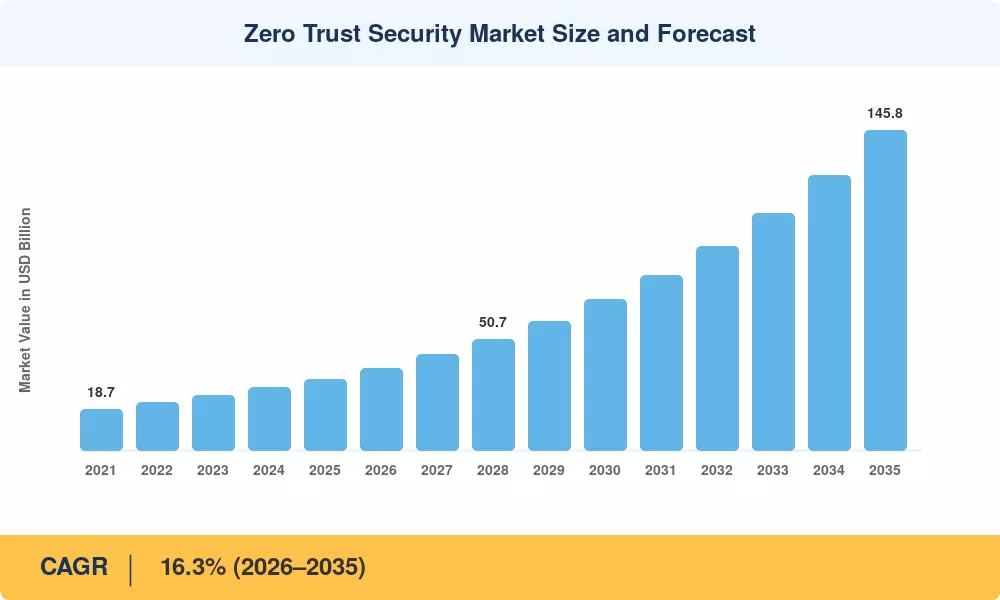
NEW YORK, NY, UNITED STATES, August 27, 2026 /EINPresswire.com/ — The Zero Trust Security Market is expanding as organizations replace traditional perimeter-based defenses with continuous identity and access verification. The market was estimated at USD 32.2 billion in 2025 and is projected to rise from USD 37.5 billion in 2026 to USD 145.8 billion by 2035, representing a 16.3% CAGR throughout the forecast period. Growing cloud adoption, remote work, cyber threats, and regulatory requirements are accelerating zero-trust implementation.
The Zero Trust Security Market is gaining momentum as organizations move away from traditional perimeter-based cybersecurity toward continuous verification and least-privilege access. Zero trust security evaluates users, devices, applications, and access requests before granting permissions, helping organizations protect distributed resources across cloud, hybrid, and remote-work environments.
Identity and access management, multifactor authentication, microsegmentation, endpoint security, behavioral analytics, and adaptive access controls are central components of zero trust architectures. Increasing cyberattacks, cloud adoption, regulatory requirements, and remote work are accelerating adoption. North America leads the market, while Asia-Pacific is expected to experience strong growth as businesses across India, Japan, South Korea, and other economies accelerate digital transformation.
Get a Sample PDF of the Report at –
https://www.marketresearchfuture.com/sample_request/8642
Growing Adoption of Zero Trust Architecture
Zero trust architecture is becoming an important cybersecurity framework for enterprises managing distributed applications, users, devices, and data. Instead of automatically trusting users or devices inside a corporate network, zero trust continuously evaluates access requests based on identity, device condition, application context, and risk. This approach helps organizations reduce unauthorized access and strengthen security across hybrid and multi-cloud environments.
Increasing Cybersecurity Threats
The growing frequency of ransomware, phishing, credential theft, insider threats, and supply-chain attacks is encouraging businesses to reconsider conventional security architectures. Traditional perimeter defenses can become less effective when employees access corporate applications from multiple locations and devices. Zero trust security solutions provide continuous authentication, authorization, monitoring, and policy enforcement to help organizations limit exposure and reduce the potential impact of compromised credentials.
Identity and Access Management Integration
Identity and access management is a central component of zero trust security because every access request must be evaluated before resources are made available. Zero trust platforms increasingly integrate authentication, privileged access management, single sign-on, and adaptive access controls. Organizations can apply policies according to user identity, device posture, location, application sensitivity, and risk level, creating more granular control over enterprise resources.
Cloud Adoption Driving Market Growth
The migration of applications and workloads to cloud environments is strengthening demand for zero trust security solutions. Enterprises increasingly operate hybrid and multi-cloud infrastructures where conventional network boundaries are difficult to establish. Zero trust technologies provide identity-centric security controls that can be applied consistently across cloud services, private infrastructure, SaaS applications, and remote endpoints, helping businesses protect resources regardless of their physical location.
Remote and Hybrid Work Security
The expansion of remote and hybrid working models has significantly changed enterprise security requirements. Employees may connect to corporate resources from homes, public networks, branch offices, and personal devices. Zero trust security helps organizations verify users and devices before granting access while continuously monitoring activity afterward. This approach can reduce reliance on network location as a primary security indicator and improve protection for distributed workforces.
Endpoint Security and Device Verification
Endpoint verification is an important element of zero trust implementation because compromised or unmanaged devices can create significant security risks. Zero trust platforms can assess device health, operating-system status, security controls, configuration, and other contextual factors before permitting access. Combining endpoint security with identity-based policies enables organizations to restrict access from devices that do not meet predefined security requirements.
Network Security Transformation
Zero trust is changing the traditional approach to network security by moving protection closer to users, applications, workloads, and data. Microsegmentation, software-defined access, encrypted connections, and continuous monitoring can limit lateral movement after an attacker gains initial access. Organizations can create smaller security zones and apply policies based on business requirements, reducing the ability of attackers to move freely across enterprise environments.
Microsegmentation Adoption
Microsegmentation is increasingly being deployed as part of zero trust strategies to isolate applications, workloads, and sensitive resources. By dividing infrastructure into smaller security segments, organizations can apply specific access policies to individual workloads and services. This approach can restrict unauthorized communication and reduce lateral movement, particularly within large data centers, cloud environments, and complex enterprise networks.
Zero Trust for Small and Medium Enterprises
Small and medium-sized enterprises are gradually adopting zero trust solutions as cybersecurity threats become more sophisticated and cloud services become more widespread. Cloud-delivered security platforms allow smaller organizations to implement identity verification, access controls, endpoint monitoring, and security policies without maintaining extensive security infrastructure. Managed security providers can further help SMEs address limited cybersecurity expertise and operational resources.
Artificial Intelligence in Zero Trust Security
Artificial intelligence and machine learning are enhancing zero trust capabilities by enabling more dynamic risk assessments. AI-powered systems can analyze authentication patterns, user behavior, device activity, and network events to identify unusual activities. These insights can support adaptive access decisions, such as requesting additional authentication or restricting access when risk indicators increase, making zero trust policies more responsive to changing conditions.
Zero Trust and Security Analytics
Security analytics strengthens zero trust frameworks by providing continuous visibility into users, devices, applications, and network activity. Analytics platforms can correlate authentication events, endpoint signals, access requests, and application behavior to identify potential threats. Combining zero trust cybersecurity with security analytics enables organizations to move toward risk-based access decisions and faster identification of suspicious activity.
Regulatory Compliance Supporting Adoption
Government cybersecurity requirements and industry regulations are encouraging organizations to adopt stronger identity and access controls. Federal agencies and regulated industries increasingly emphasize continuous verification, least-privilege access, multifactor authentication, and stronger monitoring. Zero trust frameworks can support these objectives by providing structured policies for authentication, authorization, segmentation, and continuous security assessment.
North America Zero Trust Security Market
North America commands approximately 38% of the Zero Trust Security Market, supported by federal cybersecurity mandates, high enterprise security spending, and a mature cybersecurity vendor ecosystem. Organizations across government, financial services, healthcare, technology, and critical infrastructure are investing in identity-centric security architectures. Regulatory pressure and increasing awareness of sophisticated cyber threats are further accelerating adoption throughout the region.
Buy this Premium Research Report at:
https://www.marketresearchfuture.com/checkout?currency=one_user-USD&report_id=8642
Asia-Pacific Zero Trust Security Market
Asia-Pacific is expected to be the fastest-growing regional market, with an estimated 18.5% CAGR during the forecast period. Rapid digital transformation across India, Japan, South Korea, and other regional economies is increasing the need for modern security architectures. Cloud adoption, expanding digital services, connected infrastructure, and growing cybersecurity investments are creating substantial opportunities for zero trust security providers.
Europe Zero Trust Security Market
Europe is experiencing growing demand for zero trust solutions as organizations strengthen identity security, data protection, and digital resilience. Financial institutions, healthcare providers, government organizations, and large enterprises are increasingly implementing stronger access controls. Regulatory developments focused on cybersecurity and data protection are encouraging organizations to improve authentication, monitoring, segmentation, and least-privilege access practices.
Zero Trust for Critical Infrastructure
Critical infrastructure organizations are increasingly considering zero trust architectures to protect essential systems from sophisticated cyber threats. Energy, transportation, telecommunications, utilities, and government infrastructure often contain highly valuable operational technology and information systems. Zero trust principles can help isolate sensitive environments, restrict privileged access, continuously validate identities, and improve monitoring of interactions between users, devices, applications, and operational systems.
Zero Trust and IoT Security
The rapid growth of connected devices is creating additional demand for zero trust security controls. IoT environments can contain large numbers of devices with different operating systems, security capabilities, and ownership models. Zero trust approaches can help authenticate devices, limit their network permissions, and monitor their behavior. Applying least-privilege principles to IoT connections can reduce opportunities for compromised devices to become entry points into broader networks.
Challenges in Zero Trust Implementation
Despite strong market opportunities, organizations can face challenges when implementing zero trust architectures. Legacy infrastructure, fragmented identity systems, complex application dependencies, insufficient security expertise, and implementation costs can delay transformation. Businesses may also struggle to establish appropriate policies without disrupting legitimate workflows. Successful deployments generally require careful assessment, phased implementation, strong governance, employee training, and continuous policy optimization.
Browse In-depth Market Research Report:
https://www.marketresearchfuture.com/reports/zero-trust-security-market-8642
Data Privacy and User Experience
Zero trust environments require organizations to collect and evaluate substantial contextual information to make access decisions. This can create privacy considerations involving employee activity, device information, location data, and authentication behavior. Excessive security checks can also affect user experience if policies are poorly configured. Organizations therefore need to balance strong security controls with privacy principles, operational efficiency, and convenient access to legitimate business resources.
Competitive Landscape
The Zero Trust Security Market includes cybersecurity vendors specializing in identity management, network security, cloud protection, endpoint security, security analytics, and access management. Competition is increasingly focused on integrated platforms that combine multiple zero trust capabilities. Vendors are investing in adaptive authentication, AI-powered risk analysis, secure access service edge, cloud security, microsegmentation, and centralized policy management to address increasingly complex enterprise requirements.
Emerging Zero Trust Security Trends
Several technologies are expected to influence the market throughout the forecast period. AI-assisted risk assessment, passwordless authentication, continuous authorization, identity threat detection, secure access service edge, cloud-native security, microsegmentation, and unified security platforms are gaining attention. Organizations are also moving toward security architectures that combine identity, endpoint, network, application, and data controls rather than deploying isolated security technologies.
Passwordless Authentication Growth
Passwordless authentication is becoming an important component of modern zero trust strategies because stolen passwords remain a major source of unauthorized access. Biometrics, hardware security keys, device-based authentication, and cryptographic credentials can reduce dependence on traditional passwords. Integrating passwordless technologies with adaptive access policies can strengthen identity protection while creating a more convenient authentication experience for employees and customers.
Zero Trust and SASE Convergence
The convergence of zero trust with Secure Access Service Edge is creating a more integrated approach to securing distributed users and applications. SASE combines networking and security capabilities through cloud-based architectures, while zero trust principles determine whether users and devices should receive access. Together, these technologies can provide secure connectivity, policy enforcement, threat protection, and centralized visibility for organizations operating across hybrid environments.
Future Outlook for Zero Trust Security Market
The Zero Trust Security Market is positioned for substantial long-term expansion as enterprises modernize cybersecurity architectures and reduce dependence on traditional network perimeters. Growth from USD 37.5 billion in 2026 to USD 145.8 billion by 2035 highlights significant market potential. Increasing cloud adoption, remote work, identity threats, AI-enabled attacks, regulatory requirements, and digital transformation will continue supporting investments in zero trust technologies.
Frequently Asked Questions:
What is driving the Zero Trust Security Market?
Cloud adoption, increasing cyberattacks, remote work, identity threats, regulatory requirements, and demand for continuous access verification are major growth drivers.
What will the Zero Trust Security Market be worth by 2035?
The market is projected to reach approximately USD 145.8 billion by 2035, growing at a 16.3% CAGR.
Which region is growing fastest?
Asia-Pacific is expected to be the fastest-growing region, with an estimated 18.5% CAGR during the forecast period.
Why is zero trust important for businesses?
It continuously verifies users and devices and applies least-privilege access controls to reduce unauthorized access and lateral movement.
What role does AI play in zero trust?
AI analyzes user, device, and network behavior to support dynamic risk assessments and adaptive access decisions.
What is microsegmentation?
Microsegmentation divides networks and workloads into smaller security zones, allowing organizations to apply granular access policies.
How does zero trust support cloud security?
It provides identity-based and context-aware access controls that protect resources across hybrid and multi-cloud environments.
What are the major zero trust challenges?
Legacy infrastructure, integration complexity, implementation costs, fragmented identities, privacy concerns, and cybersecurity skills shortages are key challenges.
➤➤ Regional & Country-Level Reports by Market Research Future:
Canada Zero Trust Security Market –
https://www.marketresearchfuture.com/reports/canada-zero-trust-security-market-62486
Europe Zero Trust Security Market –
https://www.marketresearchfuture.com/reports/europe-zero-trust-security-market-62487
Germany Zero Trust Security Market –
https://www.marketresearchfuture.com/reports/germany-zero-trust-security-market-62485
➤➤ Exclusive Research Publications by Market Research Future:
Customer Information System Market –
https://www.marketresearchfuture.com/reports/customer-information-system-market-31509
3D Stacking Market –
https://www.marketresearchfuture.com/reports/3d-stacking-market-31514
Cyber Crisis Management Market –
https://www.marketresearchfuture.com/reports/cyber-crisis-management-market-31531
Cloud Based Enterprise Resource Planning Market –
https://www.marketresearchfuture.com/reports/cloud-based-enterprise-resource-planning-market-31540
Consumer Video Feedback Software Market –
https://www.marketresearchfuture.com/reports/consumer-video-feedback-software-market-31546
Competitive Intelligence Tool Market –
https://www.marketresearchfuture.com/reports/competitive-intelligence-tool-market-31552
Accounts Receivable Automation Market –
https://www.marketresearchfuture.com/reports/accounts-receivable-automation-market-31613
Enterprise Streaming Media Market –
https://www.marketresearchfuture.com/reports/enterprise-streaming-media-market-31641
Market Research Future
Market Research Future
+ +1 855-661-4441
email us here
Legal Disclaimer:
EIN Presswire provides this news content “as is” without warranty of any kind. We do not accept any responsibility or liability
for the accuracy, content, images, videos, licenses, completeness, legality, or reliability of the information contained in this
article. If you have any complaints or copyright issues related to this article, kindly contact the author above.

Media gallery